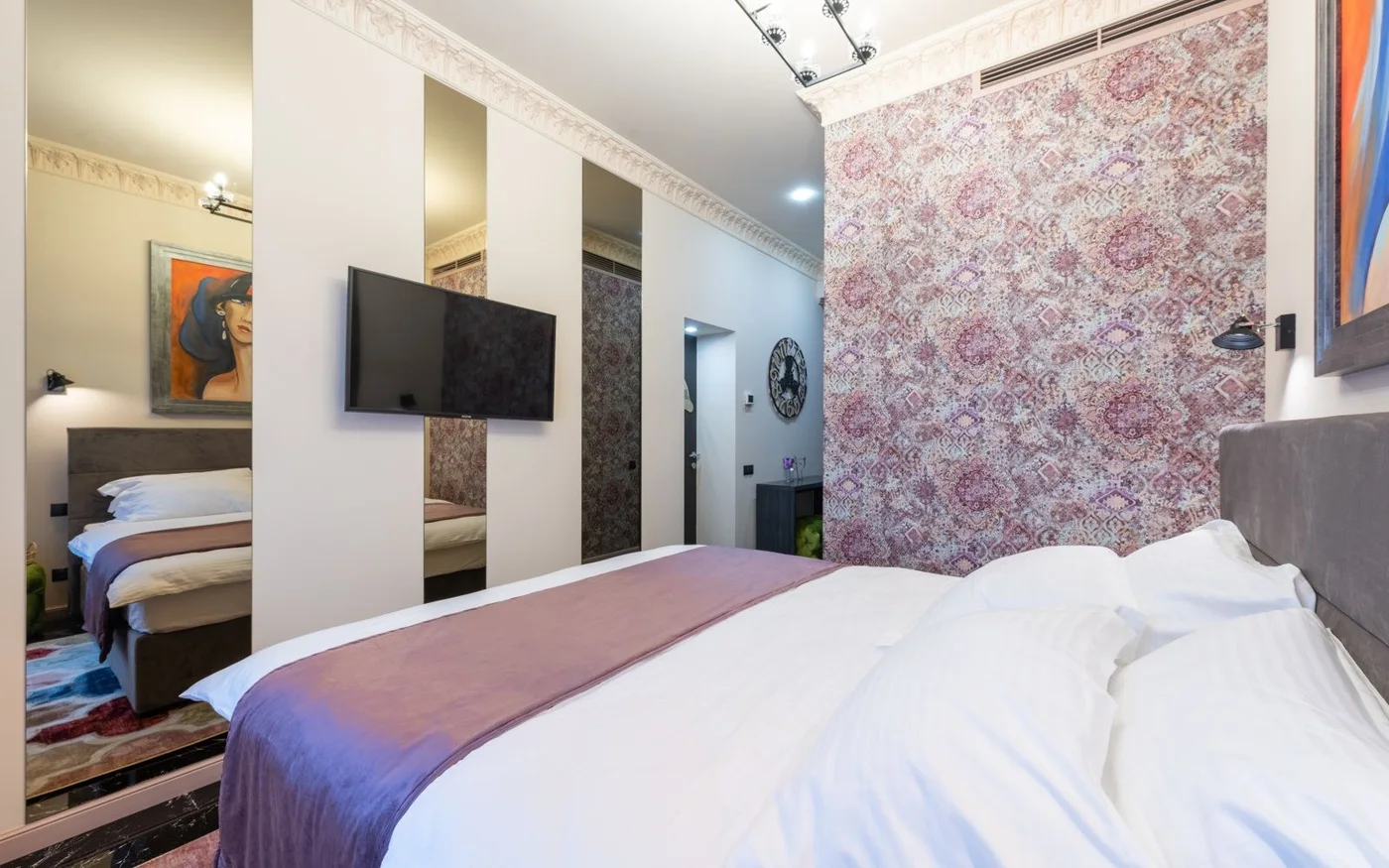
A family asks AI search for one room in Dubai for two adults and three children aged five, eight and eleven. It gets a list of named properties and room categories, each presented as a fit. The first suggestion even explains how the third child could share existing bedding. On the hotel operator’s listing, the named suite has a maximum of four people.
We recorded two responses to the same question in Bing’s AI Mode on 6 November 2026 and checked the first three distinct properties in each. The responses gave the same three properties, in the same order. Of the three distinct cases, the official evidence contradicted the recommendation for one named suite and left the exact family fit unconfirmed for two. One of those two had an official capacity of five, which made it a plausible lead. Its public room page still left the stated adult and child mix open.
For a family, the decision is whether to keep a room on the shortlist or take it through to booking. For a hotel team, the decision is whether the official room page lets a reader answer that question using the room name, guest cap, child rules and booking unit together.
What we asked and what counted as a fit
We froze the English question and sampling rule before collection.
Which Dubai hotels offer a single bookable room or suite for two adults and three children aged 5, 8 and 11? No separate or connecting rooms. Name the room category, explain the occupancy limit, and link to each hotel's official room page.
The prompt contains five guests, a specific mix of adults and children, and a restriction on the unit. We interpreted the unit at the booking level. A multi-bedroom apartment could qualify if it was offered as a single accommodation category. A recommendation that depended on booking two separate connecting rooms would fail. We also looked for the exact property and room category because a cap for one accommodation type cannot be transferred to another one at the same hotel.
We opened the same public Bing AI Mode query in two separate tabs in the same browser context in a short collection window. Both pages displayed a sign-in option. We recorded the rendered answer and checked the first three distinct Dubai properties named in reading order. The sampled text matched in substance across both runs. The tabs may have shared cache or session behaviour, so the repeat records what appeared twice in this setup. It cannot establish that Bing generated two independent answers.
We compared each recommendation with first-party room or booking information. A published cap below five directly contradicts the proposed fit. A category and total cap can be verified even when the adult and child split is unconfirmed. The strongest classification, documented fit, required support for the stated party in one unit. The question gave no travel dates, and we made no booking or live inventory check.
The three suggestions we checked
| Property and category in both answers | Why the answer said it fit | What we found in operator material | Assessment for this family |
|---|---|---|---|
| Mövenpick Hotel Jumeirah Beach, Family Suite | King bed and sofa bed, plus a third child using existing bedding | The official Family Suite description gave a two-adult, two-child combination. Accor's corresponding listing gives a maximum of four people. | Contradicted |
| Banyan Tree Dubai, Family Suite | Space for five, with a proposed sofa bed and rollaway arrangement | The operator lists capacity five and King & Twin bedding. The checked room page leaves the exact age mix and proposed extra bedding unconfirmed. | Unconfirmed, total capacity supported |
| Sheraton Grand Hotel, Dubai, 3-Bedroom Suite | One apartment-style unit for five to six, supported by a third-party citation | Marriott describes a Three-Bedroom Apartment at the property. We did not establish a room-specific cap and child mix from the operator pages checked. | Unconfirmed, similar official category found |
The two answers yielded six sampled appearances but only three distinct property and room cases. The table counts each case once. The tally is one contradicted, two unconfirmed and zero documented fits under this study’s rule. It applies to the sampled categories. Other room types at the properties and other names in the answers were outside the comparison.
Mövenpick Hotel Jumeirah Beach
The answer named the Family Suite and pointed to the operator’s room page. Its explanation started with a real-looking arrangement, a king bed for the adults and a sofa bed for two children. It then added permission for a third child aged five to eleven to use existing bedding. That last step was what made the recommendation appear to satisfy the question.
Accor’s listing for the Family Suite Partial Sea View with Balcony sets the maximum number of people at four. The earlier indexed official Family Suite description also states a combination of two adults and two children, or a maximum of four adults. The older room address given by the answer now leads to a current Mövenpick room page. The operator listing supplies the four-person maximum. We used that listing to resolve the specific claim about the named category. Accor’s Mövenpick Hotel Jumeirah Beach listing, Mövenpick Family Suite page
This case shows why bedding and headcount need separate checks. The ability to share a bed describes how guests might sleep. The occupancy cap describes how many guests can be accommodated under the stated room rules. Even if a rollaway or sofa bed is available on request, a five-person recommendation needs explicit evidence that the room permits five. The answer supplied a bedding explanation while its cited operator’s limit contradicted the resulting headcount.
Banyan Tree Dubai
The answer said the Family Suite typically accommodated five and described a living area suitable for a sofa bed and rollaway. The resort’s room page gives useful evidence for the first part. It lists capacity five, a floor area of 164 square metres and King & Twin bedding. It also describes a living room and a layout intended for families. Banyan Tree’s family holidays page names the same suite and provides a category-specific booking link. Banyan Tree Dubai Family Suite, Banyan Tree family holidays
The public material we checked did not establish that one unit accepts two adults and three children of the stated ages, or that the sofa bed and rollaway combination is available. The answer’s suggestion could therefore stay on the shortlist as a lead to verify. A reader could cite the five-person capacity as a published operator fact and ask reservations or use the official booking flow to confirm the family mix and sleeping setup. We did not reach a party-specific booking result and left the case unconfirmed.
The hotel’s brand uses Instagram in its own Dubai property coverage. The official Banyan Tree post below is linked from an operator article about the Dubai resort and sits in its spa section. It gives property context. The Family Suite specification is the relevant source for capacity and bedding. Banyan Tree’s Dubai article with the original embed
Sheraton Grand Hotel, Dubai
Both answers placed the hotel under an apartment-style heading and named a 3-Bedroom Suite for five to six people. The supporting citation was a third-party family travel site. The answer also printed a Marriott address under an official-page label. We could not verify that exact address through our source check. The operator’s independently located property pages use a different hotel identifier in the address and describe a Three-Bedroom Apartment. Marriott’s Sheraton Grand Hotel rooms and suites, Marriott’s Sheraton Grand Hotel apartment categories
The apartment page describes a 169-square-metre category with two king beds, one twin bed and a maid’s room. That establishes an official category that could be the intended recommendation. We did not find operator support on the pages checked for the answer’s exact occupancy range or for the stated adult and child combination. The general booking control on the site displays a maximum of eight guests per room. That control applies before a guest selects the category and cannot establish a cap for this apartment on its own.
This difference matters at the next step. A traveller who searches the hotel site for the answer’s category name needs to recognize the operator’s actual label. Even after finding it, the traveller still needs the party-specific occupancy rule. We classified the fit as unconfirmed. The official category and bed description make the lead more specific without resolving the missing booking condition.
What a link in the answer can prove
The three entries illustrate different relationships between a recommendation and its source. In the first case, an official room link accompanied a claim the operator’s limit contradicted. In the second, a relevant official page supported the category and capacity but left the age mix and extra bedding open. In the third, a third-party citation supported the answer’s wording while the separately printed operator URL needed repair and the official category name differed.
A hotel’s domain beside a recommendation is therefore a starting point for verification. Check the statement nearest the citation. Does the page say how many people may occupy the exact category? Does it describe a permissible split between adults and children, or just say the property welcomes families? Does it describe the standard beds, extra beds on request, or one offer whose conditions apply only when booked a particular way?
A useful way to annotate a shortlist is to put one claim per line. For the Banyan Tree case, “Family Suite exists,” “published capacity is five” and “this category accepts two adults with children aged five, eight and eleven” are separate entries. The first two can be supported directly from the checked page. The third needs another piece of evidence. If a source supports only part of a recommendation, the reader can keep that part and take a specific question to the next step.
Why an official URL can still send you to the wrong evidence
An answer may print a brand’s domain while the path points to a different property code or to a generic page. That makes entity matching a practical check. For hotels with similar names, look for the city, property name and address on the destination before extracting a room rule. Then match the room label and, where visible, the booking category code. If the page redirects to a current version, verify what the destination says and keep a note of which address was supplied.
The route to the evidence also matters when the answer includes more than one kind of link. An inline citation can point to a travel guide, while a separately printed official link points to a hotel. In our Sheraton case those were distinct. The third-party source was what Bing cited alongside its claim, and the Marriott address was presented separately. Treating the two as a single official citation would overstate the support visible in the answer.
How a hotel can make the room decision easier
Start with a room category a reservation agent recognizes. Use the same category label on the hotel’s room page and in the booking flow where possible. If a name has changed, make the relationship between the earlier name and the current category clear at the destination. A redirect can keep a link useful when the destination preserves the specific room information the guest was looking for.
Put the combined occupancy limit close to the room name. Then describe the allowable adult and child combinations and the ages or thresholds that affect them. If the rules depend on standard beds, sharing existing bedding or requesting an extra bed, explain those conditions separately. A guest comparing rooms should be able to tell whether an extra bed changes the bedding setup or is part of an occupancy condition. When a condition varies by offer or date, give a direct route to check it before payment.
Explain what one booking unit includes. A suite with interior bedrooms, a serviced apartment and a package of two connecting guestrooms can all suit different travellers. For a guest asking for a single bookable category, spell out which type it is and what the confirmation will show. Keep the description consistent across the room page and reservations materials. Where the guest has to call, identify what they need to ask and which category name to use.
Test the page against an actual enquiry. Give a colleague a party of two adults and three children with specified ages. Ask them to find the room, explain the occupancy rule and show where it is documented. If the answer relies on a guess about the sofa bed or a hotel-wide booking control, improve the room-level information. This checks whether a visitor can make the decision. A separate AI search check can show what a particular surface repeats at a particular time. AI Visibility’s guide to checking recommendations
How to verify a suggested room before booking
Use the operator’s reservations page or published reservations channel for the exact property. Enter the real dates, choose one unit and give the ages that will apply at check-in. If the engine shows only two rooms or changes the category, check the result against the original requirement. If it returns no inventory, the reason can include date availability or rate restrictions as well as occupancy. A no-result screen by itself leaves the reason open.
Ask the hotel to confirm the exact unit name, all five guests, the beds it provides and whether any extra bed depends on availability or a charge. Check that the response covers children aged five, eight and eleven rather than just saying that children can stay. Where the no-connecting-rooms requirement matters, ask what the reservation confirmation will list. Keep the confirmed details with the booking, especially if a third-party listing uses different wording.
For a hotel team monitoring this sort of query, record the status of each check in order. Start with whether the property was named, then whether the exact category was named, then whether the cited evidence supported the stated party. A hotel can appear twice while the answer gives a misleading room explanation twice. A record that counts names alone would miss the problem that matters to the guest.
What this check can and cannot tell us
This was one English question, one search surface, two closely spaced loads and three distinct cases under a prespecified sampling rule. The repeated answer is useful evidence that the same claims were shown on those two loads. It leaves independence, wider consistency and behaviour in other products open. We excluded map and advertising cards and did not code the rest of the suggestions. Our checks used public operator material and a second pass through the classification rules by the same analyst.
A current room page can change, and a booking for a specific date can expose conditions the public description leaves out. We made no reservation, contacted no property and tested no pricing or availability. Unconfirmed means the sources we checked did not settle the stated case. The documented contradiction is narrower too. It concerns the Mövenpick category the answer named and the published maximum for that room.
The useful distinction for both readers is between a suggestion and a room that can be substantiated for the exact party. One checked suggestion failed on the published cap. One offered a promising five-person capacity but needed confirmation of the guest mix. One needed a corrected official category reference and a room-level occupancy check. Those are three different next steps hiding behind the same confident recommendation format.
AI Visibility is published by Lunasol, which offers GEO and AEO services. About AI Visibility