“Which Dubai hotel room can take two adults and three children, and can the 12-year-old use the waterpark alone?” contains several buying decisions. The party needs a category that fits, a rate it can book, and an answer about a facility that may have its own rules. A photo of a family suite or a general statement about resort access leaves those decisions open. Hotels can make the answers easier to find by publishing the exact conditions at the level where each applies.
Quick answer. Give each room category a page or clearly labeled section with its bed setup, room arrangement, and allowed adult and child combinations. Keep check-in requirements, rate terms and facility eligibility in separately labeled records. Connect those records to the exact property and booking path. Treat a recommendation as provisional until the live system confirms the guest mix, dates and selected rate.
Write for the party that has to fit
Start with questions that a reservations team can answer. Can two adults and three children share one booking? Will the children sleep in the same room or in a room connected by an internal door? Does the advertised room have a king, twins or a sofa bed? If someone needs an extra bed or cot, can it be confirmed for that category? If a category is sold as interconnecting rooms, say so explicitly. If connecting rooms are available only on request, tell guests how and when the request will be confirmed.
Publish adult and child combinations rather than using a single maximum wherever the rules differ. A room that sleeps four might accommodate three adults and one child, or two adults and two children, depending on the property’s configuration and policy. Those combinations cannot be inferred from a total. Record how the hotel defines child and infant for occupancy and check whether age is assessed at arrival or under another stated rule. Where your public material lists only upper limits, send other combinations to the booking system or reservations team.
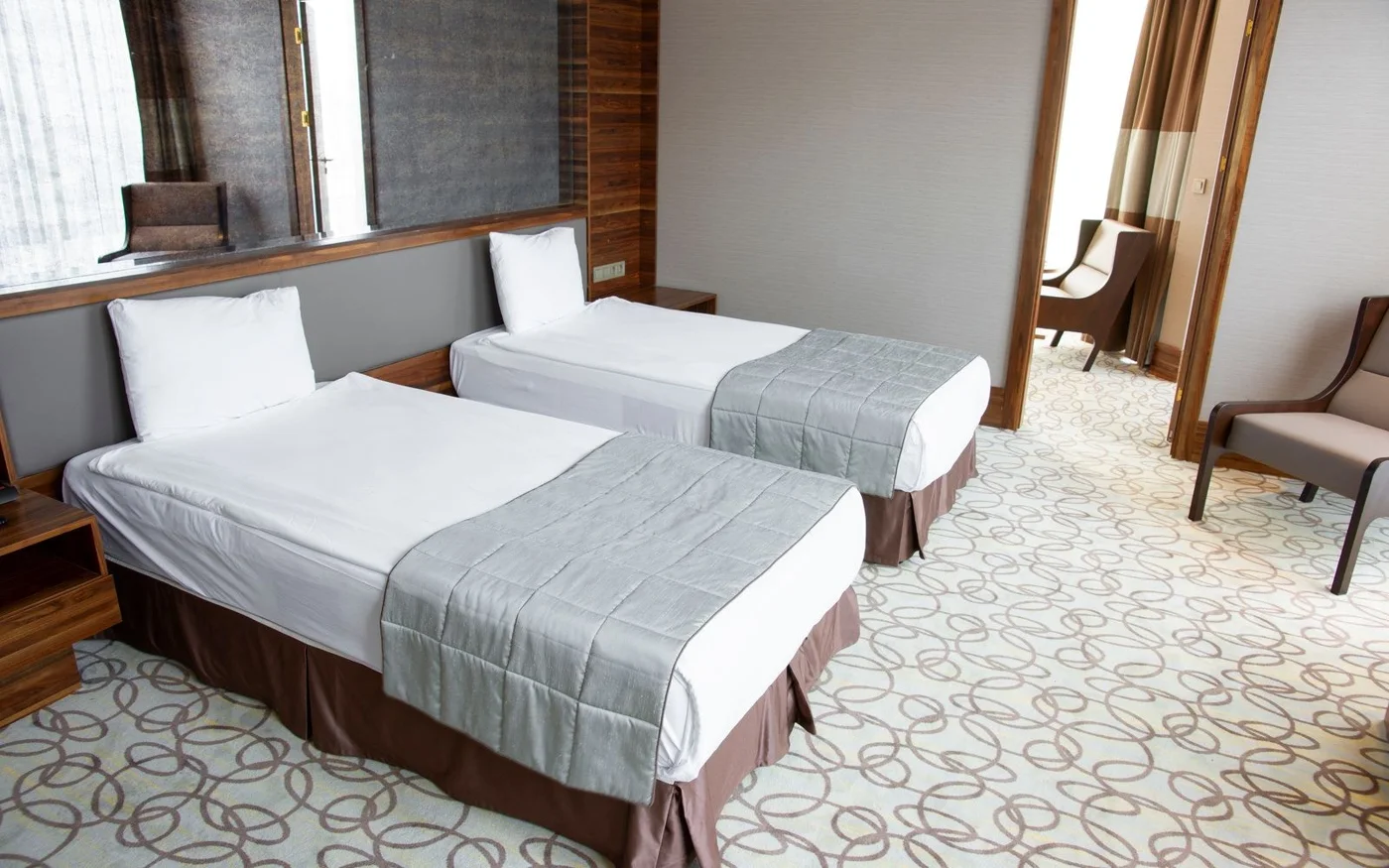
Keep bed configuration distinct from occupancy. Two queen beds tell a guest something about sleeping arrangements, but do not establish which party combinations the hotel accepts. Conversely, a maximum occupancy does not tell a guest whether someone will sleep on a sofa bed or whether an extra bed is included. A buyer who wants a guaranteed bed arrangement needs to know what the category promises and what still depends on availability.
| Buyer question | Evidence the hotel should publish | What still needs confirmation |
|---|---|---|
| Can this room take our party? | Exact room and adult, child and infant combinations | Dates, ages and the live availability result |
| Will the rooms connect internally? | Category description distinguishing guaranteed layout from requests | Confirmation for the selected product or request |
| Who can book and check in? | Property booking and identification requirements | Special cases through reservations |
| Which benefits come with this stay? | Named room, rate or channel and the inclusions that apply | Exact selected rate and any availability conditions |
| Can our child use a facility alone? | Facility-specific age, supervision and session requirements | Current activity rules for that child and visit |
Compare room layouts without flattening their rules
Atlantis, The Palm’s Imperial Club page distinguishes three categories. It lists the Imperial Club King Room for up to three adults, the Imperial Club Queen Room for up to three adults and one child, and the Family Club Room for up to six adults and one child. It describes the Queen Room as having two queen beds and the Family Club Room as interconnecting Ocean or Palm King and Queen Rooms. Those records support comparisons of the published maximums and physical layouts. They do not establish every possible adult and child combination a booking engine will accept for a given date. Atlantis, The Palm Imperial Club rooms.
Jumeirah Beach Hotel’s Two Bedroom Ocean Family Room page describes two interconnecting Ocean Deluxe Rooms. Its at-a-glance details list two bed configurations and state capacity in terms of adults and children. The page gives up to five adults and one child or one adult and five children. A customer should see those figures attached to this named category, rather than a generic Jumeirah family-room result. Jumeirah also uses similar names for other categories. Its 2024 announcement describes Ocean Family Club and Ocean Balcony Club rooms and provides different published combinations for them. The launch release is historical, so use the current category and booking information to confirm the applicable terms. Jumeirah’s Two Bedroom Ocean Family Room and Jumeirah’s room launch announcement.
For the opening question about two adults and three children, these pages help identify categories worth checking. They do not settle the booking without the children’s ages and the selected dates. A hotel can make that handoff explicit. Put the room name, layout and occupancy guidance in visible text and give guests a booking link that preserves the property and category where the booking system supports it. If the customer must enter ages again, keep the criteria and the reason visible. No live reservation or room inventory was tested for these examples.
Separate check-in, room occupancy and facility access
Property-level check-in requirements answer who can make or use the reservation and what they need to bring. Atlantis, The Palm’s FAQ says a guest must be at least 18 to book a room. Its property terms say guests must provide valid physical identification and name a passport or UAE Emirates ID. These are the operator’s published conditions for this property. When a customer asks about a specific circumstance, such as an adult paying for someone else, send them to the property’s reservation team for the applicable procedure. Atlantis, The Palm FAQ and property terms.
A facility can use a different threshold. In its Aquaventure FAQ, Atlantis says unaccompanied children must be at least 13 to enter the waterpark and identifies height restrictions for certain rides. The same FAQ describes Atlantis Explorers Club for ages four through 12, with a separate arrangement for younger children subject to babysitter availability and fees. Treat each rule as belonging to the named activity. A child who fits a room category may still need an adult for an activity, and a waterpark admission rule does not establish eligibility for every ride or programme. Atlantis, The Palm FAQ.
Explain inclusions with the same precision. The Imperial Club page describes lounge access and breakfast in the lounge among the privileges included with its Imperial Club rooms. Keep the benefit tied to that category and any applicable conditions. A guest reading a property overview might otherwise interpret “club lounge” as a general facility available under any room rate. If a benefit applies only to certain registered guests, a direct booking or a particular period, make the limitation easy to find beside the claim. Imperial Club room privileges.
Show where purchase terms can change the decision
A room page explains what the category is. A rate explains what the guest is buying on specific dates. Display the rate name, inclusions and payment or cancellation conditions before the commitment step. If the property publishes terms for one class of accommodation, keep that scope visible. Atlantis, The Palm’s property terms, for example, specify a full deposit at booking and a non-refundable deposit on cancellation for Signature Suites. That statement should not be applied to the Imperial Club categories above. For a guest comparing rooms and packages, the relevant terms are the ones attached to the selected rate. Atlantis, The Palm property terms.
Resident and membership offers deserve their own eligibility section. Specify who must qualify, what evidence the hotel asks for, which categories or dates apply and whether companions are covered. Atlantis publishes separate Atlantis Circle terms for UAE-resident offers and programme rules. A rate with residency or membership conditions can sound attractive in a discovery answer while being unusable by the party. Give guests a way to confirm their eligibility before paying and avoid carrying one offer’s occupancy limits into the standard room description. Atlantis Circle terms.
Distinguish a request from a confirmed inclusion. A guest who needs early check-in, a particular view or an extra bed may regard it as essential. Label whether the category guarantees it, whether the rate includes it, and whether staff still need to confirm it. A property description that says an amenity is available should lead to its terms. A confirmation should preserve the result for the guest’s booking.
Give discovery content a useful handoff
A person may discover the property through a photo, a creator recommendation, a search result or an assistant. A historical Atlantis, The Palm Instagram post embedded in WATG’s coverage illustrates the visual entry point. The resort links the same account from its own site. A visual introduction can help someone recognize the property. The room category, guest requirements and rate terms need a current first-party source that the person can inspect and use. Atlantis, The Palm Instagram post, WATG’s original embed and Atlantis’s official FAQ.
Write the category and conditions in the main page text. Give the exact property and room name near each occupancy statement. A standalone answer should make sense even when read out of context. “Children are welcome” is too broad for someone choosing a room or activity. “The Family Club Room is described as interconnecting King and Queen Rooms” gives the reader a category and a concrete detail to verify. Use labels such as “Room occupancy,” “Rate inclusions” and “Waterpark access” so each answer remains connected to the correct rule.
Place links where they help the buyer complete the next check. From a category page, link to the correct booking flow and relevant property FAQ. From a package page, identify the rooms or rates included and link to their descriptions where available. From a facility page, state whether the rules apply to hotel guests, day visitors or both. Keep the language versions aligned on the same constraints, particularly ages, number of guests and dates.
Hotel room and guest eligibility record
- Property and exact room category or internal product identifier
- Layout, beds and confirmed adult, child and infant combinations
- Age definitions and how to confirm occupancy for the requested dates
- Property booking and check-in requirements
- Selected rate, inclusions, payment and cancellation scope
- Separate facility rules and the guests or sessions they apply to
- Approved source, booking link, owner and date checked
Test the questions that could change a booking
Build test scenarios from real reservation questions. Include a family with a child near an age boundary, guests who need internal connecting doors, and a party whose chosen offer depends on resident eligibility. Ask staff to locate the answer from the room page and then check whether the booking engine confirms the same combination. Use an approved test route when a checkout preview is necessary. Keep the date, ages, category and rate constant while comparing the public surfaces.
Test one scenario where the booking should fail or require assistance. The guest should receive a useful explanation or a reliable reservations route. For example, if a room appears in a search result but the party exceeds the confirmed capacity, the property can show an appropriate alternative or explain how to request connecting rooms. Verify that a change in age or room arrangement updates the answer instead of quietly switching properties.
Review the text around high-impact claims quarterly and whenever room policies, benefit eligibility or purchase terms change. Check hotel pages, partner listings and confirmations for exact room names and dates. If an assistant’s answer is part of your own audit, record the question, date and source it used, and compare the stated details with the hotel’s current records. This article’s examples are public-source comparisons. They do not measure how often any AI product recommends a property.
When reviewing partner listings, start with names that could be confused. A short label like Ocean Family may stand for a single room, a club category or a two-room product. Use an internal identifier to match the partner record and check which language version generated the description. Ask the receiving reservations team to confirm that the partner rate maps to the intended product and benefits. A correct photograph or a familiar name provides weak evidence when two categories share the same décor.
Keep an audit record when a rule changes. Note the previous wording, its effective date and which reservations could still rely on it. Update the property FAQ, the applicable room or offer page and the confirmation language together. If an age limit changes only for a particular facility or session, publish the new scope there and review any older snippets that can still bring visitors to the old wording. Use the hotel’s approved customer channel for affected bookings. A public page can clarify the current rule, while the booking team determines what applies to an existing reservation.
Can the hotel describe every room as family-friendly?
Describe the concrete features that make each category useful to a family. Publish the guest combinations, bed setup and any interconnecting arrangement where confirmed. A general family label can help orient the buyer, while the room and booking details determine whether it fits their party.
Where should a guest look if the room page and booking confirmation differ?
Check that both documents identify the same property, room, dates and rate. Raise a material difference with the hotel or booking provider before relying on it, especially when it changes the guest count, payment or a needed inclusion. The hotel should keep the source records consistent and explain any legitimate rate-specific differences clearly.
AI Visibility is published by Lunasol, which offers GEO and AEO services. About AI Visibility.